
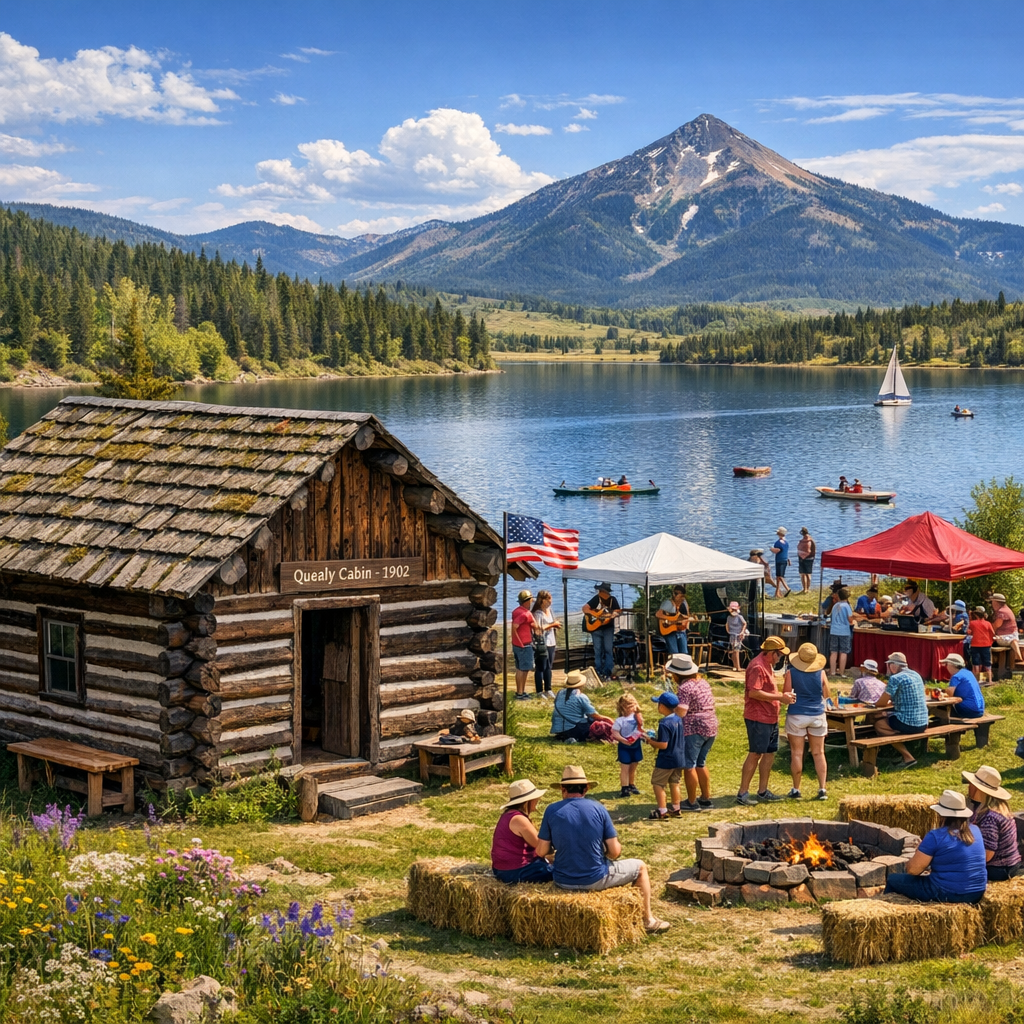
Steamboat Lake, nestled in the heart of Colorado’s Routt County, is more than just a picturesque destination; it’s a living testament to the region’s rich history and a focal point for community engagement.
A Glimpse into the Past
The area surrounding Steamboat Lake was originally inhabited by the Yampatika band of the Ute tribe, who utilized the land as seasonal hunting grounds. The Utes followed the migration paths of the animals they hunted, leaving behind few archaeological artifacts due to their nomadic lifestyle. As mining declined in the early 20th century, ranching emerged as a primary industry, with both cattle and sheep ranchers vying for grazing rights during the “sheep and cattle wars.” Notable historical sites in the area include the Quealy Cabin and the Wheeler Homestead area, remnants of the region’s ranching heritage.
Community Events and Gatherings
Today, Steamboat Lake serves as a hub for community events that celebrate both its natural beauty and cultural heritage. The Steamboat Lake Outpost regularly hosts events such as live music performances, open mic nights, bingo, and trivia nights, fostering a sense of community among residents and visitors alike. Additionally, the annual Yampa River Festival, held in nearby Steamboat Springs, features activities like paddling, kayaking, and a tube rodeo, drawing participants from across the region.
Preserving Our Heritage
Efforts to preserve the area’s history are evident in the restoration of landmarks like the Carver Power Plant, which has been transformed into Centennial Hall, a community facility in the heart of Steamboat Springs’ historic downtown. Such initiatives ensure that the stories of early settlers and indigenous peoples continue to inspire and educate future generations.
Steamboat Lake stands as a beacon of history and community spirit, reminding us of the importance of preserving our past while embracing the present.